
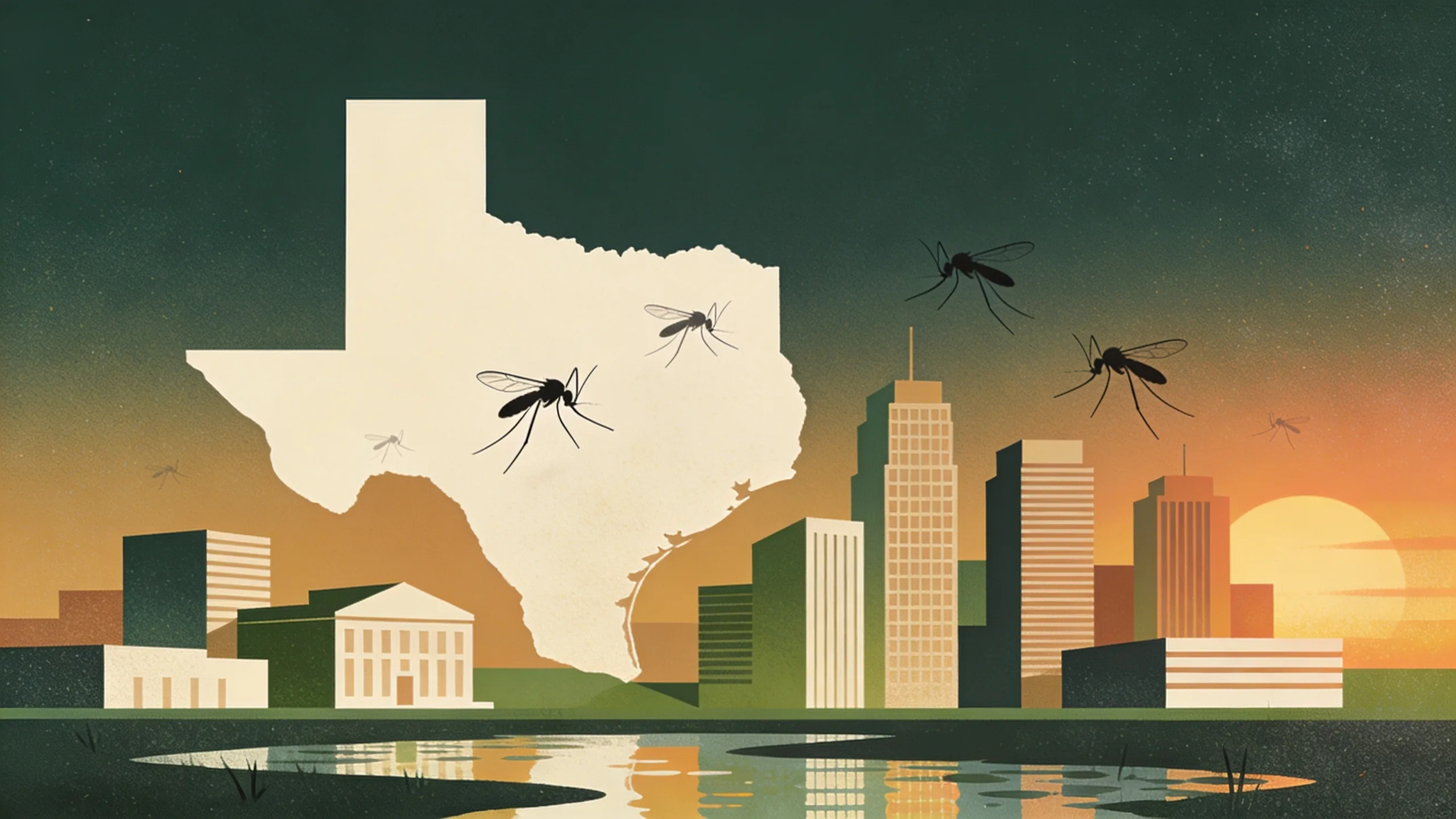
Houston and Dallas Rank Among Top 10 Most Mosquito-Infested Cities in 2026
Texas metropolitan areas continue to dominate national rankings for mosquito activity, with Houston and Dallas both holding firm in the top 10 of Orkin's 2026 Mosquito Cities List released this week.
Houston claimed the No. 7 spot while Dallas followed closely at No. 8, according to the annual ranking based on new residential mosquito treatments performed between March 2025 and March 2026. Though both cities slipped one position from the previous year, their continued presence among the nation's most active mosquito hubs signals persistent challenges for residents and public health officials alike.
"Over the past decade, we've seen mosquito activity expand beyond traditional hotspots," said Shannon Sked, an Orkin entomologist. The shifting climate and expanding range of Aedes aegypti—commonly known as the yellow fever mosquito—are creating new breeding grounds across regions that historically faced minimal pressure.
The implications extend beyond mere nuisance. The Centers for Disease Control and Prevention identifies mosquitoes as the deadliest animals worldwide, responsible for more than 600,000 malaria-related deaths annually. Within the United States, these insects serve as primary vectors for West Nile virus, Eastern Equine Encephalitis, and Zika. Perhaps most concerning for Texas residents is the significant uptick in dengue fever cases—a disease once considered rare domestically but now increasingly reported across southern states.
Further down the list, San Antonio experienced a more pronounced decline, dropping four spots to No. 41. While this suggests some regional variation in mosquito pressure, the broader pattern reveals a pest problem that has evolved from a southeastern regional issue into a nationwide public health concern.
Orkin's data highlights dramatic shifts in mosquito activity geography. A decade ago, Atlanta led the nation for six consecutive years. Since 2021, Los Angeles has maintained the top position, marking a fundamental redistribution of mosquito populations across the continental United States. Midwestern cities now show some of the fastest growth, with Milwaukee and St. Louis each jumping 15 spots in this year's rankings.
The company has renewed its "Mosquitoes Don't Deserve a Drop" campaign in partnership with the American Red Cross. From May through August 2026, Orkin will donate $25 for every mosquito control service purchased, up to $250,000, to support the national blood supply during peak transmission season.
For Texans living in high-activity zones, entomologists recommend the BITE prevention framework: Block skin exposure with long sleeves and CDC-approved repellents; Install tight-fitting screens on windows and doors; Trim vegetation where mosquitoes rest during daylight hours; and Eliminate standing water—the primary breeding habitat for most species.
As summer approaches, health departments across the state are intensifying surveillance efforts. With West Nile virus season typically peaking between July and September, the timing of this ranking serves as an early warning for residents to implement protective measures before peak mosquito activity arrives.
Sources
Texas Bug Slayers Editorial Team
Editorial Board
The Texas Bug Slayers editorial team brings together licensed pest control professionals, entomologists, and writers dedicated to helping Texans protect their homes and families from pests.
Related Articles
Austin Officials Urge Vigilance as Mosquito Season Kicks Into High Gear
Austin and Travis County health officials launch mosquito season awareness campaign, warning residents about West Nile virus risks and promoting the Four Ds prevention strategy.
Heat and Humidity Drive Mosquito Surge Across Central Texas
Unseasonably warm, humid weather creates prime breeding conditions for mosquitoes. Health officials confirm West Nile and dengue cases as experts advise the 'Four D's' of protection.
West Nile Virus Detected in North Texas: Mosquito Samples Test Positive in Hutchins and Richardson
Dallas County Health and Human Services confirms West Nile Virus in mosquito samples from Hutchins and Richardson, marking an early start to the 2026 mosquito season in North Texas.